
An oven that preheats but will not maintain the set temperature can involve sensing, heating output, ignition, control behavior, door sealing or power conditions. Cost depends on what testing shows, not on the fact…
A Dacor oven that will not hold temperature needs measured evidence before anyone prices a repair: a repeatable test, the mode affected and any code. The estimate should then say whether the problem is a sensor, a heating or control fault, a door seal, or a normal cycle being misread.
An oven that preheats but will not maintain the set temperature can involve sensing, heating output, ignition, control behavior, door sealing or power conditions. Cost depends on what testing shows, not on the fact that the temperature falls.
A useful Dacor repair estimate begins with diagnosis. The visible symptom tells the technician where to start, but it does not tell you the labor, part or access requirement by itself.
The biggest variables are the exact model, which system is involved, whether a model-specific part is available, how the appliance is installed and whether the first visit can be completed without a return trip.
Before anyone prices the repair, document the basics:
The use-and-care manual for one Dacor Modernist wall oven says the convection fan normally cycles on and off during baking, and that steam from the vent during convection baking is normal. It also says temperature is factory-calibrated and can be adjusted by plus or minus 35 F, an adjustment that does not affect broil or self-clean temperatures.
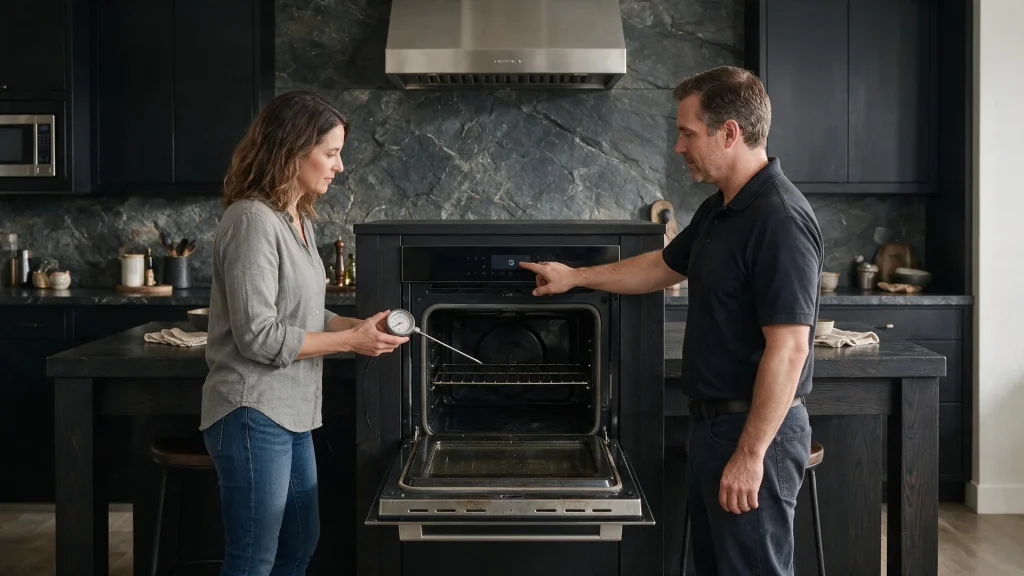
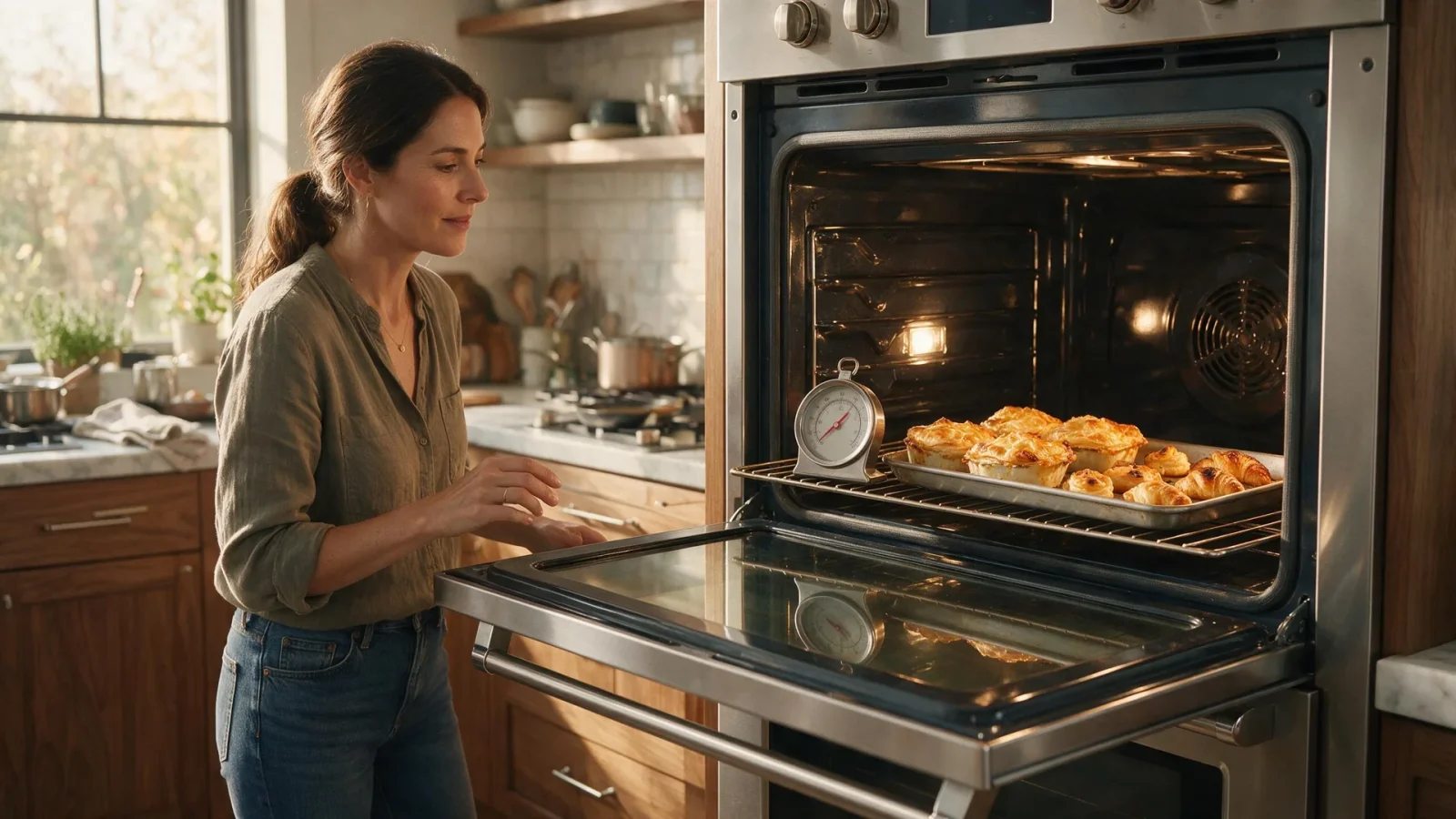
So before treating a temperature swing as a failure, take several readings with the door closed and compare the adjustment setting. A seal that is not doing its job can also affect hold. The same manual describes the door gasket as essential for a good seal and says not to clean it.
| Symptom | What it can point to | What you can safely check |
|---|---|---|
| Temperature drifts above and below setpoint | Normal heating cycles | Average several readings with the door closed |
| Falls steadily after preheat | Heating output, control or door seal | Check the door closes fully; avoid opening it during the test |
| Only one mode misbehaves | A mode-specific path | Compare bake, convection and broil |
| Sensor or high-temperature code appears | Sensor or control fault | Note the code and read your manual |
A premium built-in appliance can also add access work. Panel-ready refrigeration, double wall ovens and integrated dishwashers need to be protected from cabinet, floor and panel damage when access is required.
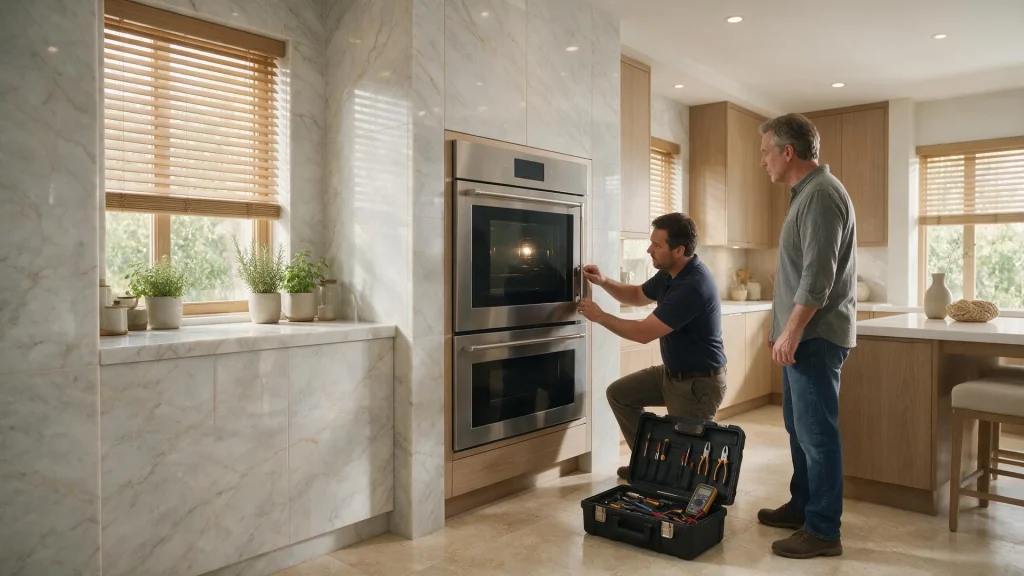
Ask whether the estimate is based on measured sensor/control/heating behavior and whether calibration alone is appropriate. A replacement decision should consider the exact model, part availability, installation fit and the condition of the rest of the appliance.
The quote should explain what was found, what part or repair action is proposed and whether additional work could become necessary only after access or testing. If the problem is installation-related rather than an internal appliance problem, that should be stated clearly.
The Modernist manual lists C-20 and C-23 as oven sensor open or short, C-21 and C-31 as high-temperature codes and C-A2 as a cooling motor code, with service advised for several of them. Codes differ by model, so use the table for your own oven.
Ask whether the estimate rests on a measured result and whether an adjustment alone could be enough. That separates a calibration question from a failed component, and it keeps the quote tied to what was found.
Do not compare a repair estimate only with the shelf price of a new appliance. Replacement may involve delivery, haul-away, cabinet fit, panel work, electrical or gas changes, plumbing, ventilation and the loss of a model that was selected to match a specific kitchen design.
A well-maintained Dacor appliance with one isolated repair can be a different decision from an older unit with several unresolved problems, repeated leaks or multiple major system failures.
For related context, see Dacor Oven Turns On but Does Not Heat: Separate Control Response From Actual Heat and One Dacor Oven Cavity Works and the Other Does Not: Cost Questions for a Double-Oven Repair.
Model-specific estimates should also connect to `/dacor-models/` where the actual model page exists.
For a range, wall oven, cooktop or rangetop, identify the exact zone, cavity and mode. A problem limited to one burner or one oven cavity is a different diagnostic pattern from a failure affecting every heating function.
Gas and line-voltage cooking appliances also have a clear DIY limit. User-accessible cleaning, cap seating, settings and observation are appropriate; internal ignition, valve, wiring, control and power testing belongs to qualified service.
Not reliably. A symptom can have several causes, and the repair scope depends on the diagnosed system and exact model.
No. Diagnosis and repair approval are separate. The applicable service-call/diagnostic terms should be explained before or at the visit.
Only after the failed component has been confirmed. The wrong revision or a misdiagnosed part can make the repair more expensive.
It can. The manual for one Dacor wall oven says the gasket is essential for a good seal, so a displaced or damaged gasket is worth mentioning, but it should not be cleaned or pulled.
No. The Modernist manual describes the convection fan cycling on and off during baking as normal.
No. The manual says the temperature adjustment does not apply to broil or self-clean temperatures.
Dacor oven repair: common problems, safe checks, model and error-code resources, and when to book professional oven service.
Dacor built-in ovens: models, common problems, error-code resources, troubleshooting guides, and repair links in one model-aware hub.
An oven display can look normal while the cavity fails to heat. The useful distinction is whether the appliance accepts the mode, whether any…
A double oven provides a built-in comparison: one cavity can help show that the home still has power while the other has a local…
A door that remains locked after self-clean can be frustrating, but forcing the latch while the oven is hot can damage the mechanism or…
Share a few details and we’ll confirm an appointment. Prefer to talk? Call us and we’ll help right away.
Fields marked with * are required.