
Repeated ice buildup can be encouraged by warm-air entry, door/ice-room sealing issues, water splash or a component problem. Prevention starts with keeping the area clean, dry and correctly closed rather than chipping…
Ice buildup around a Dacor ice maker is easier to prevent than to remove: keep the ice area closing cleanly, keep the bin seated, and avoid long idle periods without emptying it. Chipping with tools is not the answer. If ice keeps returning in the same place after the area has been cleaned and dried, the water, defrost or sealing system needs diagnosis.
Repeated ice buildup can be encouraged by warm-air entry, door/ice-room sealing issues, water splash or a component problem. Prevention starts with keeping the area clean, dry and correctly closed rather than chipping ice away aggressively.
Maintenance is most useful when it preserves the conditions the appliance needs: clean airflow, correct sealing, free drainage, appropriate loading, clean user-accessible filters and stable utilities. It cannot repair a failed motor, control, sensor, heater, valve or sealed refrigeration component.
| Symptom | What it can point to | What you can check |
|---|---|---|
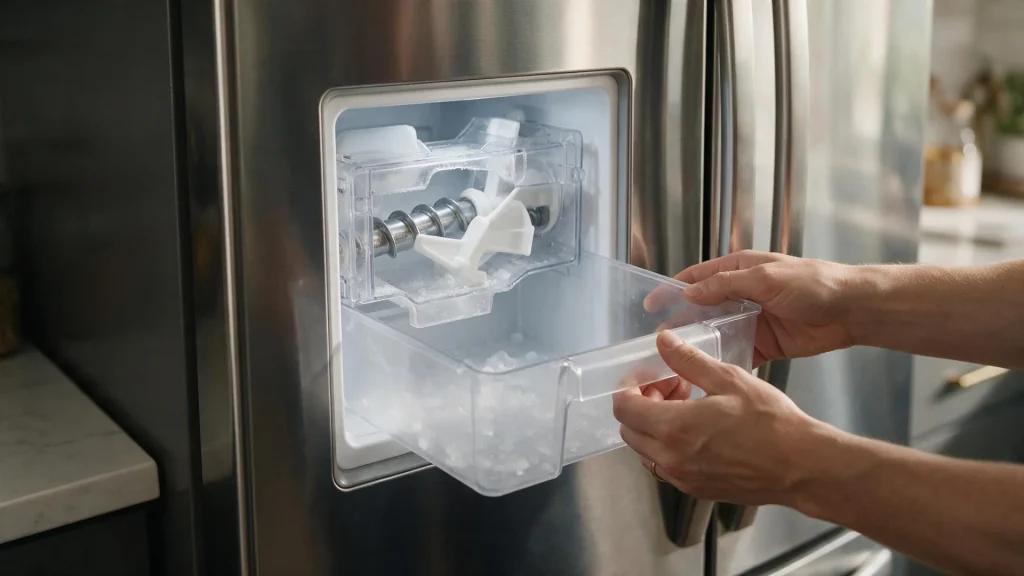
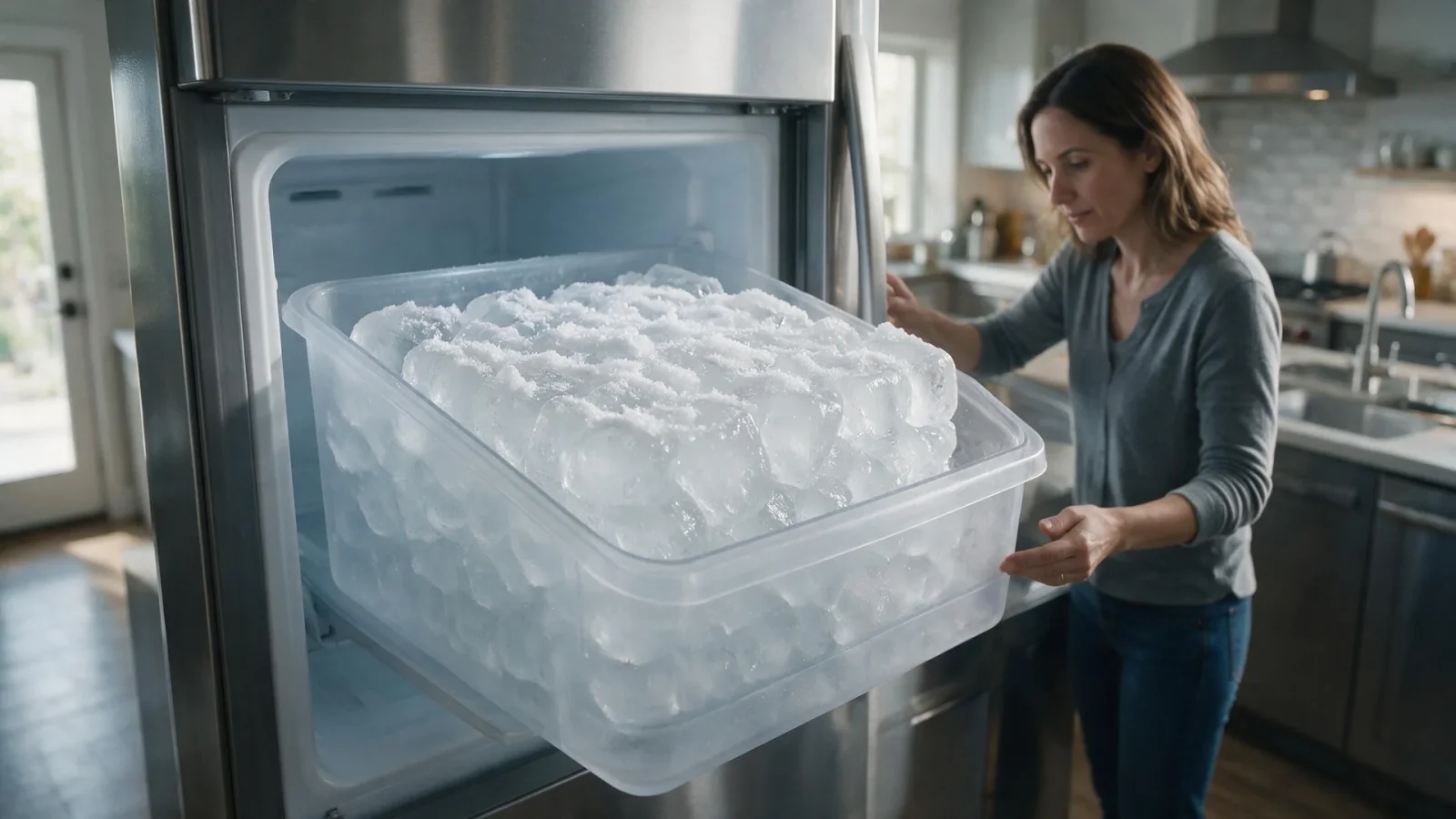
| Cubes fused together in the bin | An ice jam from a dispenser that has not been used for a while, or melted cubes that refroze | Empty the bucket as the manual describes and let fresh ice build. |
| Ice that will not dispense | Bucket not inserted correctly, or the water line is disconnected or shut off | Reseat the bucket and confirm the supply is on. |
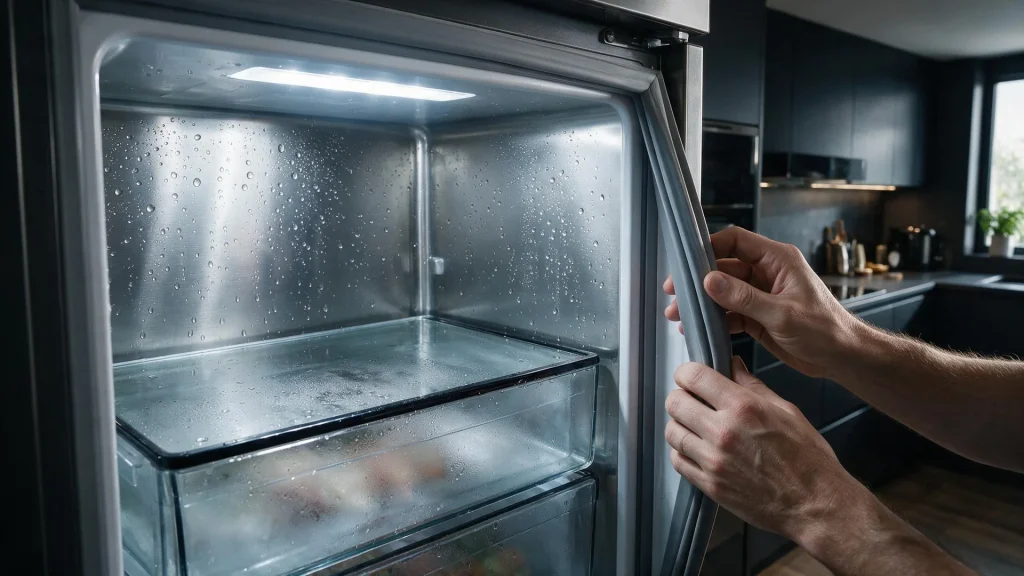
| Frost on the interior walls | A door that is not closing properly | Check that food is not blocking the door and clean the door gasket. |
| Buzzing from the ice maker | A normal fill sound, or a supply that is not connected | Compare with the manual for the model. |
Do not turn routine care into disassembly. Use the cleaning and maintenance instructions for the exact Dacor model, especially around filters, burner parts, water systems and removable dishwasher components.
These two look similar but the manuals for several Dacor refrigerators treat them differently. Clumped cubes belong to the ice maker and dispenser, while frost on interior walls belongs to a door that is not closing properly. Identify which one you are dealing with before deciding what to adjust.
The 36-inch Dacor French door manual describes an ice jam when the dispenser goes unused for about 3 weeks. If the unit will sit unused for a long time, it says to empty the bucket and turn the ice maker off.
The best maintenance clue is often a trend: ice production slows, condensation increases, cycles take longer, drying becomes less consistent, a burner needs more attempts to light, or a control behaves differently after a power interruption.
Write down the first change. That gives a technician a timeline if maintenance no longer solves the problem.
After a power failure the bucket may hold melted and jammed cubes, and the manual says to empty it before using it. Cubes that have partly melted and refrozen are a common-sense source of clumps, and removing them resets the situation.
When the supply is not connected the ice maker may buzz. The manual describes holding Cocktail Ice and Standard Ice for 3 seconds to turn the ice maker off in that case. Buzzing as the valve fills the ice maker is listed as a normal sound.
If ice repeatedly returns in the same place, maintenance has reached its limit. The water/defrost/sealing system should be diagnosed instead of repeatedly thawed.
At that point, repeating the same cleaning or reset is unlikely to solve an internal component problem. Use Dacor Ice Maker Care: Small Habits That Help Prevent a 'No Ice' Surprise or Condensation Inside a Dacor Refrigerator: A Door-Seal and Airflow Maintenance Routine if the symptom has shifted into a troubleshooting or common-problem pattern.
Use `/services/dacor-ice-maker-repair/` and `/appliances/dacor-french-door-refrigerators/` for a relevant internal route. Model-specific care should connect to `/dacor-models/` when the exact model page exists.
Ice that returns in the same corner after you have cleaned and dried it suggests a persistent source of water or warm air, not a one-off event. Ice that appears only after a power interruption or a long absence points back to a recoverable condition.
Either way, the useful information is the place, the timing and whether the doors close cleanly, not how much ice there is.
For water-using appliances, note filter changes, leak/condensation patterns and water-flow changes. For cooking appliances, note ignition changes, preheat behavior and whether a problem appears in one zone or mode. For refrigeration, keep actual temperature readings rather than relying only on “feels warm.”
Microwave symptoms should be evaluated through normal user controls only. Do not remove the outer cabinet. The appliance can contain high-voltage components that remain dangerous even after power is disconnected.
Record whether the display, fan, light and turntable behave normally and whether the symptom began after a power event. That observation helps a technician choose the correct diagnostic path without unsafe homeowner testing.
No. It reduces avoidable problems and helps you notice change earlier, but components still wear or fail.
Use only products and methods appropriate to the surface and exact model instructions. Harsh cleaners can damage finishes, seals or sensors.
When the same symptom returns after correct care, when there is a code, or when the next step would require internal electrical, gas, sealed-refrigeration or microwave work.
The manual for one Dacor model describes an ice jam when the dispenser is not used for about 3 weeks, and notes that cubes can melt and jam after a power failure. Clearing out the bucket is what the manual advises.
The manual for the 36-inch model says to empty the bucket and turn the ice maker off if the refrigerator will go unused for a long time.
Not necessarily. Frost on interior walls is tied to a door not closing properly in the manuals, so check door closure and the gasket as well.
Dacor ice maker repair: common problems, safe checks, model and error-code resources, and when to book professional refrigerator ice maker service.
Dacor french door refrigerators: models, common problems, error-code resources, troubleshooting guides, and repair links in one model-aware hub.
Ice production depends on freezer temperature, water supply, filter condition, storage-bin position and time. Routine observation helps you catch a slowdown before the bin…
Moisture inside a refrigerator often increases when humid room air enters repeatedly or when food, containers and door alignment interfere with normal sealing and…
An AutoFill pitcher can stop refilling when the pitcher is not seated correctly, the water path is restricted, the filter is overdue or the…
Share a few details and we’ll confirm an appointment. Prefer to talk? Call us and we’ll help right away.
Fields marked with * are required.